
Hidden water damage behind walls may remain undetected for many days or weeks since the cause of water leakage is confined within the wall cavity and not exposed on its surface. Water leakage may occur due to a faulty pipe, roof leakage, defective window seal or HVAC line, thus saturating the signs of water damage in walls.
Understanding the signs of a hidden water leak will help you spot one before it causes extensive damage.
Quick Answer: What Are the Signs of Water Damage Behind Drywall?
The most frequent signs of water damage and moisture behind walls include:
- Discolorations of yellow, brown, or dark colours on the walls
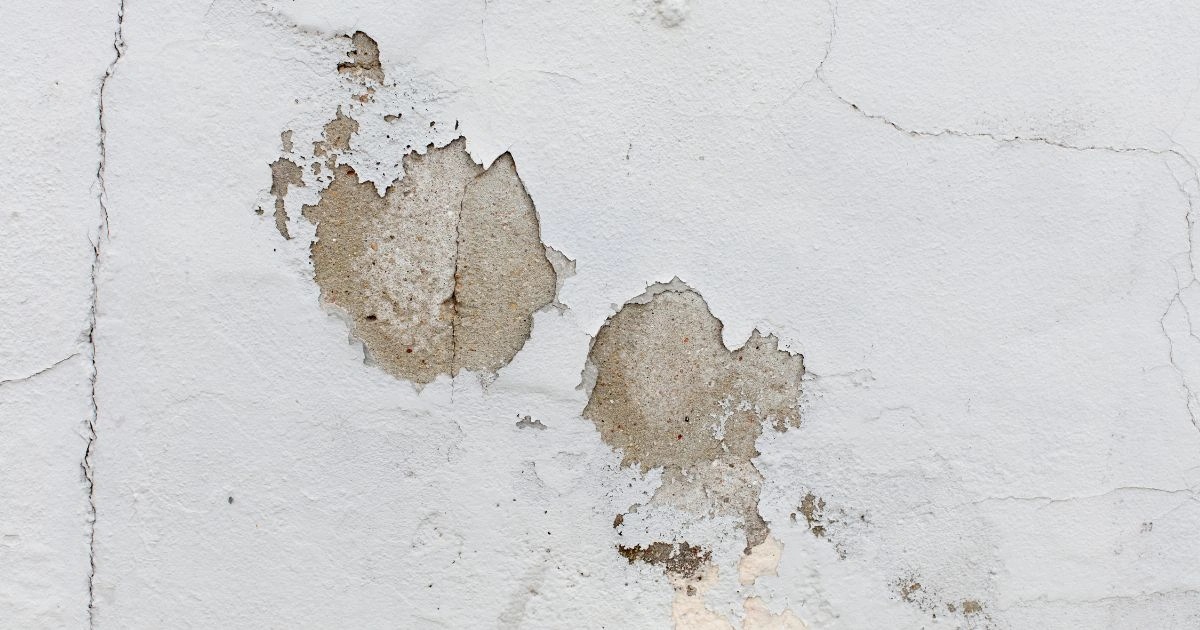
- Bubbling, peeling, or cracking paint
- Soft or swollen, wet drywall
- Odor of mustiness or dampness
- Warping or separation of baseboards
- Strange sounds of running water
- Visible presence of mold or mildew
- Unusually high levels of indoor humidity
- Repeating problems with walls despite cosmetic repairs
If you notice multiple symptoms at once, you likely have trapped moisture that requires professional water damage restoration equipment to pinpoint accurately.
Why Can Water Damage Hide Behind Walls?
Walls contain more than drywall. Behind the finished surface, you have insulation, wood framing, electrical wiring, plumbing, and other building materials.
When water enters this space, it does not necessarily travel straight down. It can move along framing, insulation, or drywall pathways before appearing somewhere else. That means a stain on one part of a wall does not always identify the exact location of the hidden water leak.
Common causes include:
- Leaking or burst plumbing
- Loose pipe connections
- Roof leaks
- Damaged flashing
- Failed window or door seals
- Bathroom plumbing leaks
- Shower or tub leaks
- Appliance leaks
- Poor exterior drainage
- Storm-related water intrusion
- HVAC condensation
- Crawl space or foundation moisture
This is why simply drying or repainting the surface will not resolve underlying water damage behind drywall.
9 Warning Signs of Hidden Water Damage Behind Walls
1. Yellow, Brown, or Dark Water Stains
One of the easiest ways to spot signs of water damage in walls is through discoloration. Staining may manifest itself in yellow patches, brown circles, or dark streaks. A stain that continues to grow over time means there is ongoing water damage.
Water stains may appear as:
- Yellow or tan patches
- Brown rings
- Dark streaks
- Irregular blotches
- Tide-like marks
- Discoloration around ceilings or corners
Pay particular attention to stains near plumbing fixtures, windows, ceilings, exterior walls, and areas below bathrooms or kitchens.
2. Bubbling, Peeling, or Cracked Paint
Moisture can become trapped behind paint and cause the finish to lose adhesion.
You may notice:
- Bubbling paint
- Blistering
- Peeling
- Flaking
- Cracked paint
- Raised areas
- Wallpaper separating from the wall
These changes can occur when moisture reaches the drywall behind the finished surface.
Do not simply repaint the damaged section.
If moisture remains behind the paint, the same problem can return, and the underlying wet drywall may continue deteriorating.
3. Soft, Swollen, or Warped Drywall
Healthy drywall should feel firm and maintain a relatively flat surface.
Water-damaged drywall may become:
- Soft
- Spongy
- Swollen
- Bowed
- Warped
- Crumbly
- Sagging
When the wall seems to be different from its surroundings, the drywall may have been infiltrated by moisture.
Do not be careless while examining the suspicious spot. The damaged drywall can decay quickly, and there may be wires running through the walls.
If you think that there is water damage behind the drywall, then do not try to make an opening on your own.
4. A Musty or Damp Smell
Sometimes your nose notices the problem before your eyes do.
A persistent musty, earthy, or damp smell can indicate that moisture is present somewhere nearby.
This is particularly important when:
- The smell keeps returning after cleaning
- The room smells damp even when surfaces appear dry
- The odor becomes stronger near a wall or closet
- The smell appears after rainfall
- The odor comes from an area with previous water damage
The presence of a musty smell cannot be said to necessarily indicate the existence of mold, but this is definitely a cause for concern about the source of moisture.
K.C. Construction & Restoration is also on the lookout for problems related to moisture and mold in cases where homeowners are experiencing musty smells. Mold inspection and testing can help identify moisture-related concerns.
5. Baseboards Are Swollen, Warped, or Pulling Away
Do not inspect only the middle of the wall.
Look closely at the bottom.
Water can collect near floors and cause baseboards to:
- Swell
- Warp
- Discolor
- Crack
- Separate from the wall
- Develop soft areas
You may also notice changes in nearby flooring.
If a baseboard is damaged while the wall above it looks relatively normal, moisture may still be present inside the wall cavity.
6. You Hear Dripping, Trickling, or Running Water
Sometimes your ears can identify a hidden leak before your eyes can.
Listen for:
- Dripping behind walls
- Faint trickling
- Hissing near plumbing
- Water movement when fixtures are off
- Repeated dripping after using a sink, shower, or toilet
A mysterious water sound merits further inspection, particularly when your water is shut off, and there’s movement nonetheless.
In case of any leak in your pipes, you need to start by sorting out the cause and then allow for the inspection of the affected moisture area. K.C. Construction & Restoration also provides broken water pipe and plumbing services in Macon, GA.
7. Mold or Mildew Appears in an Unusual Location
Visible mold can be another warning sign that moisture has been present.
Look around:
- Baseboards
- Wall corners
- Window frames
- Closets
- Behind furniture
- Bathrooms
- Ceilings
- Areas previously affected by leaks
Mold does not necessarily indicate that the whole wall is affected, but the presence of mold coupled with water damage requires more investigation.
The most crucial aspect is to determine the source of the moisture and fix it rather than treat the mold itself.
For moisture-related mold problems, professional mold removal and remediation can address the affected areas and help identify the moisture source.
8. The Room Feels Unusually Damp
You may notice that one room feels different from the rest of the house.
Signs include:
- Condensation
- Damp-feeling walls
- Persistent humidity
- A room that feels cooler or clammy
- Condensation around windows
- Damp closets or enclosed spaces
Humidity on its own is not always an indication of a hidden water problem. Ventilation issues and condensation could be responsible for causing moisture problems.
Unexplained humidity accompanied by stains, smells, or softness of the materials is a strong indication of a moisture problem.
9. The Same Damage Keeps Coming Back
If you repaint a stain, replace a panel, or clean a wall, but the discoloration, odor, or peeling returns, the core source of the water damage behind drywall has not been fixed.
Maybe you:
- Repainted the stain
- Replaced damaged drywall
- Cleaned the wall
- Removed the musty smell temporarily
- Repaired a visible section
But then the issue pops up again and again.
Damage that recurs usually indicates that the source of moisture has not yet been corrected.
Putting paint over the stain will just cover up the symptom but not the cause.
In the event that a wall continually gets discoloured, bubbled, or is wet, you should look for its source first.
Advanced Detection: How Professionals Locate Hidden Leaks
Although visual inspections can assist in recognising signs, confirming hidden water damage in the walls without destroying the drywall requires the use of sophisticated diagnostic tools:
- Pinless Moisture Meters: Measure the level of moisture present in drywall and wood without causing any damage and without creating holes.
- Infrared Thermal Imaging: Detects unusual temperatures. As water evaporates from the surface of the wall, cold spots appear on thermal images.
- Acoustic and Ultrasound Detection: Detects high-frequency sound waves produced due to pressurised micro-leaks in the pipe runs.
How to Check for Hidden Moisture Behind Walls
You can start with a simple visual inspection, but remember that surface appearance cannot always reveal what is happening with hidden water damage behind walls.
Step 1: Look for visible changes
Inspect walls, ceilings, corners, baseboards, and nearby flooring.
Look for discoloration, bubbling, warping, cracks, or separation.
Step 2: Follow the water path
Think about where water could be coming from.
Check areas near:
- Bathrooms
- Kitchens
- Laundry rooms
- Water heaters
- Plumbing lines
- Windows
- Exterior walls
- Attics
- Roof penetrations
- HVAC equipment
Step 3: Check for odor
A persistent musty smell can help identify areas that deserve closer inspection.
Step 4: Look at adjacent materials
Water rarely affects only one surface.
Check the flooring, baseboards, cabinets, insulation-access areas, and ceiling around the suspicious wall.
Step 5: Use professional moisture detection when necessary
Moisture detectors and thermal imaging equipment can be used to detect potential problems without having to tear into the drywall.
K.C. Construction & Restoration uses moisture detection as part of its process for locating hidden water damage.
Can You Have Water Damage Behind a Wall Without Seeing a Stain?
Yes. It is possible for moisture to be present in a wall without leaving any visible signs of water damage.
It is possible for this to occur in cases of leaks, water seeping through the walls, or moisture that gathers in the wall’s interior space.
That is why a musty odor, wet or soggy drywall, painting problems, high humidity levels, or even water noises should not be taken lightly just because there are no visible stains.
The lack of any stains does not automatically mean the wall is dry.
When Should You Call a Water Damage Restoration Professional?
You should contact a water damage restoration expert when:
- You cannot identify the source of the moisture.
- You suspect wet drywall or swollen structural framing.
- Water is actively entering the wall.
- The same stain keeps returning.
- You smell persistent mustiness.
- There is visible mold.
- A large area has been affected.
- Water has reached electrical systems.
- A plumbing leak has soaked drywall or insulation.
- The property has experienced flooding or significant storm damage.
Water Damage Restoration by professionals is not only about cleaning; it involves thorough water removal, drying of structures, and prevention of further occurrences.
In this regard, identification of the affected areas, water removal or extraction, drying of structural components, restoration of contents and materials that are damaged, and prevention of further occurrences are required.
K.C. Construction & Restoration offers water damage restoration and mitigation services in Macon and Middle Georgia.
What Happens During Professional Water Damage Restoration?
The exact process depends on the source and severity of the damage, but it generally involves:
1. Inspection
The restoration team identifies visible damage and looks for areas where moisture may have spread.
2. Moisture Detection
Moisture meters and other diagnostic equipment can help locate wet materials that may not look damaged from the outside.
3. Water Removal
Standing water is extracted when present.
4. Structural Drying
Air movement and dehumidification are used to reduce moisture in affected materials and indoor air.
5. Damaged Material Removal
Materials that cannot be effectively dried or restored may need to be removed according to the circumstances.
6. Cleaning and Restoration
After dealing with the moisture problem, the affected area will be cleaned and restored.
The current water damage protocol followed by K.C. Construction does not focus on just the water, but on drying, removing moisture, and avoiding molds.
Don’t Ignore the Small Signs
Hidden Water damage behind walls doesn’t become easier to deal with when it is neglected.
A small stain can be the first indicator of a potential leak. Musty odor will let you know about the presence of water, which is concealed from your view. Wet drywall is a clear indicator of the presence of water in the walls.
It will help you understand what you should do next.
If you have seen signs such as stains, wet drywall, musty odor, warped baseboards, or any other signs of water damage to the walls, we will be able to help you at K.C. Construction & Restoration identify the cause and solve the issue.
For immediate water damage restoration services in Macon and Middle Georgia, contact us at K.C. Construction & Restoration 24/7
Conclusion
In case there is evidence of any hidden water damage behind the walls, this must be detected at an early stage to avoid any complications from arising. In the event of any water damage, like discoloration of the walls or a musty odor emanating from the wall, this must not just be ignored or painted over.
Professional Services by K.C. Construction & Restoration
Do you think that there is hidden water damage behind walls? K.C. Construction & Restoration can help! 24/7 restoration services in Macon and Middle Georgia.
How We Can Help You:
- Detection of Hidden Leaks: Detecting hidden water damage behind walls with the use of thermal imaging equipment and moisture meters without unnecessary demolition of your drywall.
- Water Extraction and Structural Drying: Total water extraction and drying of cavities, insulation and framing of walls.
- Inspection and Removal of Mold: Containment and mold remediation within wall cavities.
- Total Wall Reconstruction: Repair and reconstruct damaged drywall, baseboards and paint.
Do not let the hidden water damage behind your walls become any more serious. Contact K.C. Construction & Restoration today!
Frequently Asked Questions
1. How do I know if there is hidden water damage behind my walls?
Some common signs of moisture problems include water stains, blistering or peeling paint, soft, swollen drywall, musty odor, cupping baseboards, unusual drip sound, mold formation, and recurrent wall damage. Moisture testing by experts could be done to determine hidden sources of water leaks.
2. Can water damage behind drywall cause mold?
Yes. Wet materials in your home may be conducive to growing molds. If water is wetting such materials as drywall, insulation, or framing, this issue needs to be addressed at the root cause.
3. Can a wall be wet without showing a water stain?
Absolutely. The fact that a slow leak and moisture inside the wall cavity do not lead to visible staining right away does not mean that something else might happen before that.
4. How can professionals find moisture behind walls?
Professionals have to use visual examinations, moisture meters, thermal cameras, and other diagnostic methods to detect suspicious areas. Through these approaches, one can find the presence of moisture without making any large cuts into the wall at once.
5. When should I call a water damage restoration company?
Get an expert in restoration if there is any water in the wall, if the drywall becomes spongy and puffed up, if the stain keeps recurring, if there is a musty smell or any signs of mold, and if you cannot determine the source of the water.