
Quick Answer
Smoke damage to electronics occurs when smoke particles, soot, and chemical residues settle on or enter electronic devices. These contaminants can coat circuit boards, block ventilation openings, interfere with electrical connections, and contribute to corrosion over time. Even if a television, computer, or appliance looks normal after a fire, internal damage may still be present. Keep smoke-exposed electronics switched off and unplugged when it is safe to do so, and have them inspected by a qualified electronics technician before using them again.
How Does Smoke Damage Electronics?
Smoke contains tiny particles, soot, and chemical compounds released when materials burn. These contaminants can travel through a building and settle on electronics, even in rooms where flames never reach.
Electronic devices contain delicate components that rely on clean electrical connections and proper airflow. When smoke residue enters a device, it may interfere with those components or contribute to deterioration.
The extent of the smoke damage to electronics depends on several factors, including the type of fire, the amount of smoke, the duration of exposure, and whether heat or firefighting water also affected the device.
1. Soot Can Coat Internal Components
Soot is a fine residue produced by incomplete combustion. It can settle on circuit boards, connectors, cooling fans, and other internal parts.
Some soot deposits can interfere with electrical contacts, making cleaning soot from electronics essential to prevent long-term damage. Depending on its composition and the conditions inside a device, soot can also contribute to electrical leakage or short circuits if left unaddressed.
2. Smoke Residue Can Cause Corrosion
Certain smoke residues contain acidic or reactive compounds that may damage metal contacts and other sensitive materials. Corrosion can develop over time, meaning a device might initially appear functional but experience problems later.
This is one reason why simply wiping the outside of a device may not address internal smoke damage to electronics.
3. Cooling Systems Can Become Contaminated
Computers, gaming consoles, televisions, and other electronics may use vents, fans, or heat sinks to manage temperature.
Smoke particles can accumulate in these areas and restrict airflow. If the cooling system becomes obstructed, the device may run hotter than normal, potentially shortening component life or triggering automatic shutdowns.
4. Heat and Water Can Add to the Damage
Smoke exposure rarely happens in isolation. Beyond fire damage to electronics caused by extreme heat, firefighting efforts can also introduce water or moisture to sensitive devices.
Heat can damage plastic housings, displays, batteries, and internal components. Moisture combined with electrical contamination can increase the risk of short circuits and electronic circuit board corrosion.
What Are the Signs of Smoke Damage to Electronics?
Smoke damage to electronics is not always immediately visible. Watch for these warning signs after a fire or significant smoke event:
- Black or gray residue: Soot may be visible around vents, ports, buttons, or device surfaces.
- Persistent smoke odor: A burnt smell may remain even after the outside has been wiped.
- Unexpected shutdowns: Devices may turn off, restart, or behave inconsistently.
- Overheating: Fans may run unusually loudly, or the device may become hotter than normal.
- Display problems: Screens may flicker, show unusual colors, or fail to turn on.
- Connectivity issues: Ports, connectors, or network connections may stop working properly.
- Unusual sounds: Fans or other components may make unfamiliar noises after exposure.
These symptoms do not automatically prove smoke damage. However, after a fire, they are reasons to avoid further use until the device has been checked.
Which Electronics Are Most Vulnerable to Smoke Exposure?
Different devices have different designs, ventilation needs, and internal components. Their vulnerability to smoke damage to electronics should be evaluated individually:
| Electronic device | Potential smoke-related damage |
| Computers and laptops | Contaminated cooling fans, circuit boards, connectors, and ports |
| Televisions and monitors | Residue inside ventilation openings and possible damage to displays or internal components. |
| Gaming consoles | Soot buildup in cooling systems and internal electronics |
| Printers and scanners | Contamination of moving parts, sensors, and electrical contacts |
| Routers and modems | Residue around ports and circuit boards that may affect connectivity |
| Home audio equipment | Contamination of internal components, switches, and connectors |
| Smart home devices | Residue affecting small circuit boards, sensors, and charging contacts |
| Kitchen appliances | Smoke contamination combined with possible heat or water damage |
A device that was far from the fire may still be affected if smoke traveled through open rooms, ventilation systems, or gaps in the building.
Can Electronics Still Work After Smoke Exposure?
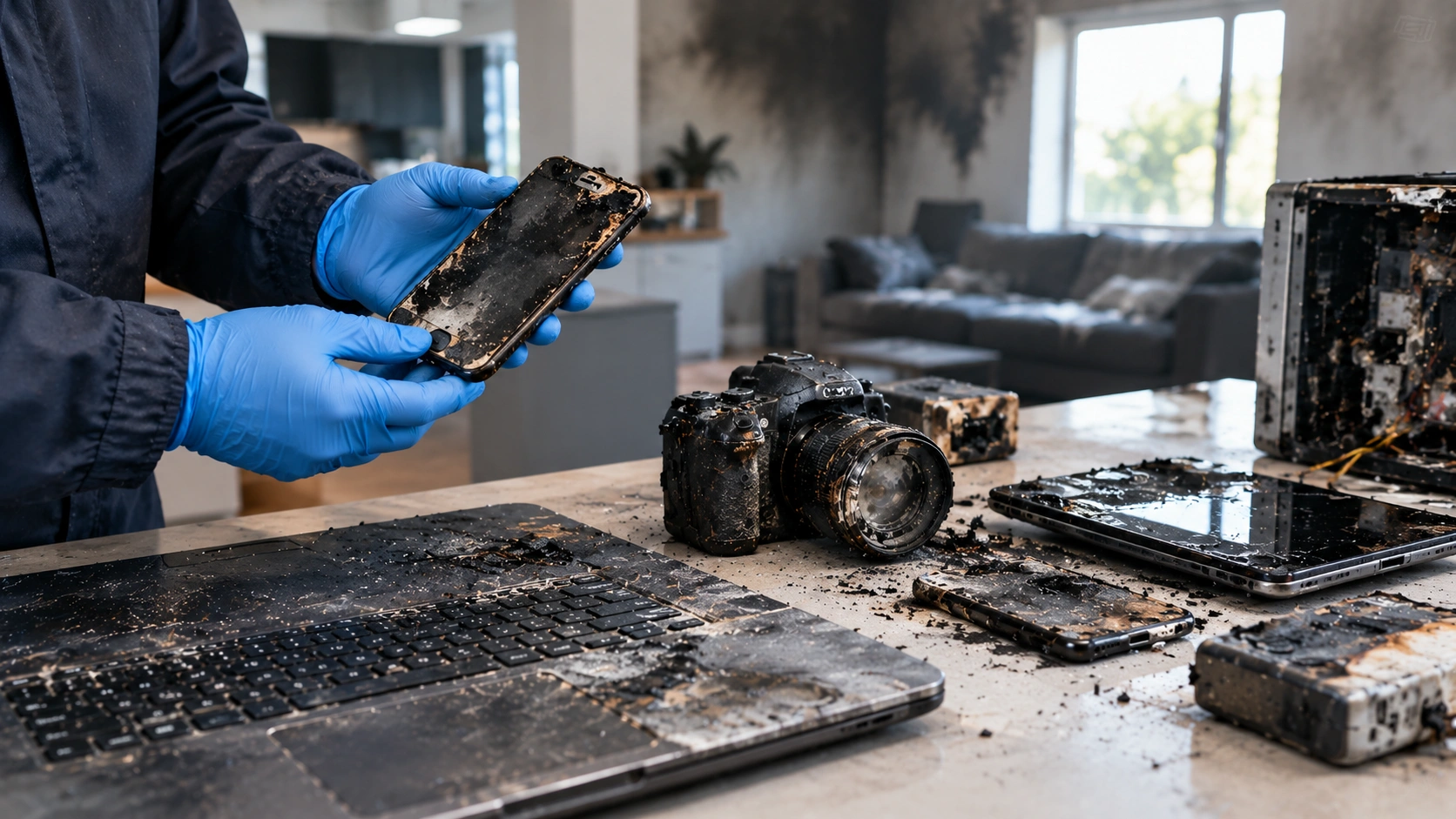
Yes. After smoke exposure to computers, some devices may continue working, especially if exposure was limited and contaminants did not reach sensitive internal components.
However, working does not necessarily mean safe or undamaged. Residue can remain inside a device, and corrosion or electrical problems may appear later.
Before deciding whether to keep or replace an item, consider:
- How close the device was to the fire.
- Whether visible soot entered its vents or ports.
- Whether it was exposed to heat, water, or high humidity.
- Whether it contains a battery that may have been damaged.
- Whether a qualified technician can safely inspect and clean it.
Devices with substantial heat damage, damaged batteries, or severe internal contamination may not be economical or safe to restore.
What Should You Do With Electronics After a Fire?
Taking the right steps can help prevent additional damage and reduce electrical risks.
Step 1: Keep the Device Switched Off
Do not turn on a smoke-exposed device just to check whether it still works. Powering it up may cause further damage if soot, moisture, or corrosion has affected internal components.
Step 2: Disconnect Power Only When It Is Safe
If the area has been declared safe and you can disconnect the device without touching damaged wiring or contaminated electrical equipment, unplug it. Never enter a fire-damaged area or handle electrical equipment if there is a risk of shock.
If the device, outlet, or wiring appears damaged, leave it alone and seek qualified assistance.
Step 3: Avoid Household Cleaning Methods
Do not spray cleaners into vents, use water for electronics cleaning after a fire, or run a household vacuum directly over delicate internal components. These methods can spread contamination, introduce moisture, or cause static-related damage.
Wiping the exterior may remove some loose residue, but it cannot confirm that internal components are clean.
Step 4: Document the Damage
Take photographs of affected devices, visible residue, and their condition when it is safe to do so. Keep purchase records, serial numbers, and warranty information where available.
This documentation may help when discussing repair or replacement with your insurance provider.
Step 5: Arrange a Professional Inspection
Scheduling a professional electronics inspection after a fire allows a certified technician to assess the device, identify internal contamination, and determine whether specialized cleaning or repair is appropriate.
For broader property contamination, professional smoke and soot damage cleanup can help address residue on affected building surfaces and belongings. Electronics may require a separate specialist assessment.
How Are Smoke-Damaged Electronics Cleaned?
The appropriate restoration method depends on the type of device, the residue involved, and the extent of contamination. Electronics should not be treated like ordinary household surfaces.
A professional assessment may involve the following steps:
1. Initial Condition Assessment
The technician examines the device for external soot, heat damage, moisture exposure, damaged cables, and other visible warning signs. They may also review its history and the conditions surrounding the fire.
2. Internal Inspection
Where appropriate, the device is opened by a qualified technician to assess whether smoke residue has reached internal components. Not every device can be safely opened or restored.
3. Specialized Cleaning
If the device is considered suitable for restoration, the technician selects a cleaning method compatible with its materials and electronics. The goal is to remove contamination without damaging delicate components.
4. Testing and Repair
After cleaning and any necessary repairs, the technician evaluates the device before returning it to service. The testing required varies by device and the type of damage found.
5. Repair or Replacement Decision
If the device has extensive heat damage, severe corrosion, a compromised battery, or unreliable operation, replacement may be the more practical option.
Cleaning can reduce contamination, but it cannot reverse every form of damage or guarantee long-term reliability.
Can You Remove Smoke Smell From Electronics?
Effective smoke odor removal can be difficult on a device because residue collects in vents, seams, and internal spaces. Cleaning the exterior may reduce the smell but will not necessarily remove its source.
Avoid using perfume, air fresheners, bleach, or household deodorizing sprays directly on electronics. Do not expose devices to excessive heat in an attempt to remove odors.
If the smell persists, a qualified electronics technician can determine whether specialized cleaning is appropriate. If the odor comes from smoke contamination throughout the property, professional fire and smoke remediation may help address the wider problem.
When Should You Call a Fire Damage Restoration Professional?
Consider professional help when smoke has spread throughout several rooms, you notice soot damage to electronics and hard surfaces, or a strong smoke odor remains after a fire.
A restoration assessment can help identify affected areas, determine which materials need cleaning, and coordinate the next steps. Electronics should still be evaluated by a technician qualified to handle the specific devices.
KC Construction Services Inc. provides fire and smoke restoration services to help property owners address smoke residue and related property damage. The restoration process depends on the extent of the damage and the materials affected.
For more information, see the guide on how to clean smoke damage from walls, ceilings, and furniture.
Frequently Asked Questions
1. Can smoke damage electronics without direct fire contact?
Yes. Smoke can travel beyond the room where a fire started and leave residue on electronics. Internal contamination may occur even when a device has not been touched by flames.
2. How long does it take for smoke to damage electronics?
Smoke residue on electronics can begin compromising a device during the initial exposure. The timing and severity of electrical failures or corrosion depend on the type of residue, environmental conditions, and device construction, meaning there is no single timeline for every electronic device.
3. Is it safe to turn on a television after smoke exposure?
It is best to keep any device with smoke damage to televisions switched off until it has been assessed. Smoke residue may have entered its ventilation openings, and heat or moisture may have caused additional damage.
4. Can a computer be saved after smoke damage?
Possibly. A computer may be restorable if its components have not suffered severe damage and contamination can be safely removed. A qualified technician should inspect it before it is powered on.
5. Does wiping electronics remove soot completely?
No. Wiping may remove loose residue from accessible exterior surfaces, but it does not confirm that soot has been removed from circuit boards, vents, connectors, or other internal components.
6. Should smoke-damaged electronics be replaced?
Not always. The decision depends on the device’s condition, the extent of contamination, repair costs, and safety considerations. Severe heat damage, battery damage, or extensive internal corrosion may make replacement the better choice.
7. Can a fire restoration company help with electronics after a fire?
A fire restoration company can assess broader smoke contamination in the property and help coordinate the restoration process. Individual electronic devices may need inspection, cleaning, or repair by a qualified electronics specialist.
Final Thoughts
Smoke damage to electronics can be difficult to identify because residue may enter a device without leaving obvious external signs. Soot buildup, corrosion, restricted airflow, and additional heat or moisture damage can affect performance and reliability.
Keep affected electronics switched off, avoid attempting internal cleaning yourself, and arrange an appropriate inspection before using them again. Addressing smoke contamination throughout the property can also help prevent residue and odor from remaining on surrounding surfaces and belongings.
For help with property-wide smoke and soot cleanup, contact KC Construction Services Inc. to discuss the appropriate fire restoration steps for your situation.
2 Responses