
If a washing machine floods your house, act quickly. Stop the washer and water supply if you can do so safely, stay away from wet electrical areas, remove standing water, and document the damage. Water from a washing machine can spread underneath flooring, into baseboards and drywall, and into rooms below before the visible puddle looks serious.
A small laundry-room spill may be manageable with immediate cleanup, but water that reaches flooring, walls, subfloors, cabinets, or another room may require professional washing machine water damage restoration.
If your home has already experienced significant flooding, contact a professional restoration company as soon as possible to inspect, extract, dry, and restore the affected areas.
What Should You Do Immediately If Your Washing Machine Floods?
Follow these steps in order if your washing machine is actively leaking or has already flooded the room.
1. Stop the Washing Machine
If you can safely reach the controls without standing in water, stop the washing machine immediately.
Do not reach behind the appliance or unplug it if water is near the electrical outlet or power cord. Water and electricity create a serious shock hazard.
2. Shut Off the Washing Machine Water Supply
Most washing machines have hot and cold water shutoff valves behind or near the appliance.
If you can reach the valves safely from a dry area, close them to stop additional water from entering the washer.
If the valves are inaccessible, damaged, or still allowing water to flow, shut off the home’s main water supply if it can be done safely.
Stopping the source is the most important first step because continued water flow can turn a laundry-room leak into widespread water damage from a washing machine.
3. Stay Away From Wet Electrical Areas
Do not walk through standing water if it has reached:
- Electrical outlets
- Power cords
- Light fixtures
- Electrical appliances
- Extension cords
- The electrical panel
Never unplug the washing machine while standing in water.
If electricity may be involved, contact a qualified professional rather than taking a risk.
4. Move People, Pets and Belongings Away From the Water
Keep children and pets away from the flooded area.
If it is safe to do so, move laundry baskets, boxes, rugs, furniture, and other belongings away from wet flooring. Place undamaged items somewhere dry.
Avoid moving heavy furniture across saturated flooring if doing so could cause additional damage.
5. Take Photos and Videos Before Cleanup
Before throwing anything away or beginning major cleanup, document the damage.
Take pictures of:
- The washing machine
- Water around the appliance
- Supply hoses and valves
- Standing water
- Wet flooring
- Baseboards
- Drywall
- Cabinets
- Nearby rooms
- Damaged furniture and belongings
- The ceiling below if the washer is on an upper floor
Good documentation can help you understand how far the water traveled and may also be useful when discussing the damage with your insurance company.
Why Can a Washing Machine Flood a House?
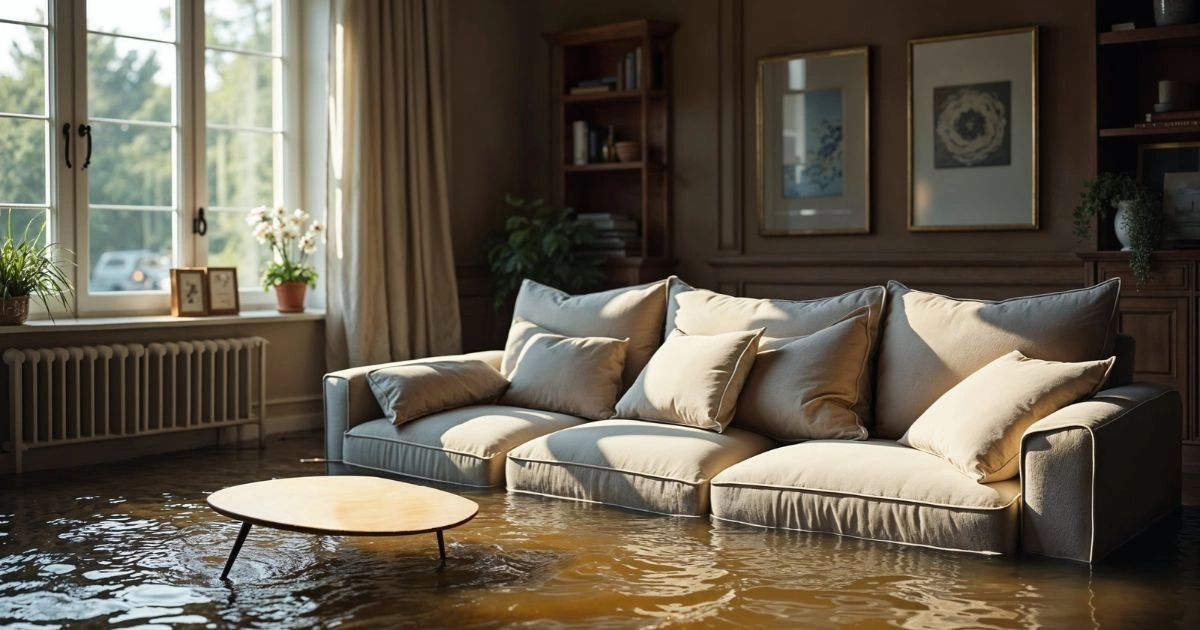
A washing machine can release a surprising amount of water when a component fails, or a drain cannot handle the discharge.
Common causes include:
Burst or Damaged Supply Hose
A cracked, loose, or burst supply hose can release water rapidly while the washer is operating or even while it is sitting unused. For related guidance, see what to do after burst pipe water damage.
Failed Drain Hose
A drain hose that is loose, damaged, or incorrectly positioned can allow wastewater to escape onto the laundry-room floor.
Clogged Standpipe or Laundry Drain
If the drain cannot handle the washing machine’s discharge, water may back up and overflow onto the floor.
Washer Overflow
A malfunctioning inlet valve, sensor, pump, or other component can cause the machine to overfill or fail to drain properly.
Door or Seal Leak
Front-loading washing machines can develop leaks around the door seal. A slow leak may initially look minor but can repeatedly expose flooring to moisture.
Loose Plumbing Connection
Connections behind the washing machine can loosen or deteriorate over time, creating a leak that may go unnoticed until substantial water damage has occurred.
Finding the source matters because cleaning up the water without correcting the cause can result in another flood.
Where Does Washing Machine Water Damage Hide?
One of the biggest mistakes homeowners make after a washer flood is assuming that removing visible water means the property is dry.
Water can travel underneath and behind materials that do not immediately appear damaged.
Check areas such as:
- Under the washing machine
- Beneath flooring
- Along baseboards
- Inside wall cavities
- Under cabinets
- Around door trim
- Beneath carpet and padding
- Inside insulation
- Around floor seams
- Under the subfloor
- In nearby closets
- In the hallway outside the laundry room
If the laundry room is upstairs, inspect the room directly underneath it for signs of moisture, staining, bubbling paint, soft drywall, or a sagging ceiling.
A washer flood can travel farther than the visible puddle suggests.
Can Washing Machine Water Damage the Subfloor?
Yes. Washing machine water damage can reach the subfloor even when the surface flooring appears mostly dry.
Water can move through seams, edges, and gaps in flooring and become trapped underneath.
This is particularly important with:
- Laminate flooring
- Hardwood
- Engineered wood
- Carpet
- Carpet padding
- Vinyl flooring
- Wood subfloors
A wet subfloor may swell, warp, or remain damp long after the surface has been cleaned. If moisture remains hidden, professional water damage restoration and mitigation can help identify affected areas.
That is why professional restoration teams may use moisture meters to determine whether water remains inside flooring, walls, or other structural materials.
How Do You Clean Up a Washing Machine Flood?
For a very small amount of clean water that has remained only on a non-porous surface, homeowners may be able to remove the water quickly using towels, a mop, or an appropriate wet/dry vacuum.
However, do not assume that visible water removal means the cleanup is complete.
A proper flooded laundry room cleanup should include:
- Stop the water source.
- Make sure the area is electrically safe.
- Remove standing water.
- Move wet belongings to a dry location.
- Check flooring and baseboards.
- Inspect nearby walls and rooms.
- Check for moisture underneath affected materials.
- Dry the area thoroughly.
- Monitor for odors, staining, or swelling.
- Arrange professional inspection when damage is extensive or hidden.
Do not use a standard household vacuum to remove standing water.
If the water has spread into drywall, subflooring, carpeting, insulation, or multiple rooms, professional water extraction and drying may be necessary.
When Is a Washing Machine Flood an Emergency?
Treat the situation as an emergency when:
- Water is still actively flowing.
- Water has reached electrical components.
- Multiple rooms are affected.
- Water has reached walls or ceilings.
- The laundry room is located above another finished room.
- Water has soaked the subfloor.
- The carpet or padding is saturated.
- Water has remained for several hours.
- You cannot determine where the water went.
- A large amount of water escaped while nobody was home.
- You notice a musty odor or visible microbial growth.
- The water came from a drain backup or another potentially contaminated source.
In these situations, attempting to handle everything yourself can allow hidden moisture to remain inside the property.
How Long Can Washing Machine Water Damage Sit?
Do not intentionally let washing machine water damage sit.
The longer materials remain wet, the greater the opportunity for swelling, deterioration, odors, and microbial growth. Read more about how long water damage can sit.
The visible floor may dry before moisture trapped underneath it does. This is why professional restoration focuses on moisture detection and structural drying rather than simply making the floor look dry.
If water has reached porous building materials, waiting several days can make the restoration more complicated.
Should You Call a Water Damage Restoration Company After a Washer Flood?
You should consider professional emergency water damage restoration when the flooding is more than a small, quickly cleaned surface spill.
Professional help is especially important when water has reached:
- Subflooring
- Drywall
- Insulation
- Carpet padding
- Hardwood
- Cabinets
- Multiple rooms
- Ceilings below
- Wall cavities
A restoration company can inspect the affected area, identify hidden moisture, extract standing water, use commercial drying equipment, and determine whether damaged materials require repair or replacement.
At KC Construction Services Inc, the water damage restoration process includes assessment, moisture inspection, water extraction, drying, and restoration services for affected properties.
What Does Professional Washing Machine Water Damage Restoration Involve?
Professional restoration is more than mopping the laundry-room floor.
Step 1: Damage Assessment
The affected areas are inspected to determine how far the water traveled.
Step 2: Moisture Detection
Moisture detection equipment can help identify water that has moved into flooring, walls, subfloors, and other areas that are not visibly wet.
Step 3: Water Extraction
Standing water is removed using professional extraction equipment.
Step 4: Structural Drying
Air movers and dehumidification equipment help remove moisture from affected materials.
Step 5: Damaged Material Evaluation
Materials that cannot be adequately dried or have suffered significant damage may need to be removed and replaced.
Step 6: Cleaning and Restoration
Affected areas are cleaned and restored after the moisture problem has been addressed.
The objective is not simply to make the laundry room look dry. The goal is to identify and address the moisture that may remain underneath or inside the structure.
What Should You Do If the Washing Machine Flooded an Upstairs Laundry Room?
An upstairs washing machine flood deserves extra attention because water can move through the floor and affect the ceiling and room below.
After stopping the water, check the room underneath for:
- Ceiling stains
- Bulging drywall
- Soft spots
- Dripping water
- Peeling paint
- Damp walls
- Water around light fixtures
Do not stand underneath a visibly sagging ceiling.
If water has reached electrical fixtures or wiring, stay away from the affected area and seek professional assistance.
Can You Prevent Another Washing Machine Flood?
You can reduce the risk of future washing machine leak water damage with regular maintenance.
Inspect Supply Hoses
Look for cracking, bulging, corrosion, or loose connections.
Check the Drain Hose
Make sure the drain hose is properly positioned and secured.
Avoid Overloading the Washer
Follow the manufacturer’s loading recommendations.
Use the Correct Amount of Detergent
Excessive detergent can create excessive suds and contribute to overflow problems in some situations.
Check for Small Leaks
Do not ignore a small puddle around the washing machine. A minor leak can be an early warning of a damaged hose, seal, pump, or plumbing connection.
Know Where Your Water Shutoff Is
Everyone in the household should know how to shut off the washer’s supply valves and where the home’s main water shutoff is located.
Consider a Water Leak Detection Device
Leak sensors can alert homeowners when water is detected around appliances. Automatic shutoff systems can provide another layer of protection in some homes.
What Should You Avoid After a Washing Machine Flood?
Avoid these common mistakes:
- Do not ignore water underneath the washer.
- Do not assume a dry-looking floor means everything is dry.
- Do not walk through electrically unsafe standing water.
- Do not unplug appliances while standing in water.
- Do not use a standard vacuum to remove water.
- Do not cover wet flooring with rugs.
- Do not paint over water stains before the source and moisture are addressed.
- Do not discard damaged belongings before documenting them.
- Do not wait several days to address significant water damage.
- Do not assume fans alone will dry hidden moisture.
The biggest mistake is treating a washing machine flood as only a cleanup problem when the water may have entered the structure.
When Should You Contact KC Construction Services Inc in Macon, GA?
If your washer has caused significant flooding, water has spread beyond the laundry room, or you suspect hidden moisture, professional restoration can help prevent the problem from becoming more extensive.
KC Construction Services Inc provides water damage restoration in Macon, GA, including emergency water damage response, water extraction, drying, moisture inspection, and restoration.
The company serves homeowners and businesses in Macon and surrounding Middle Georgia communities and offers 24/7 restoration assistance.
If you are dealing with an active water emergency, focus first on safety and stopping the source if it can be done safely. Then arrange an inspection to determine how far the water traveled and whether moisture remains inside the structure.
Frequently Asked Questions About a Washing Machine Flooded House
What should I do first if my washing machine floods my house?
Stop the washing machine and shut off its water supply if you can do so safely. Avoid wet electrical areas, remove standing water, document the damage, and check for water beneath flooring and inside nearby walls.
Can a washing machine leak cause serious water damage?
Yes. A leaking or overflowing washing machine can damage flooring, baseboards, drywall, cabinets, subfloors, and ceilings below. Water can also remain hidden beneath flooring or inside wall cavities.
Is washing machine water considered water damage?
Yes. Water released from a washing machine can cause property damage when it reaches flooring, walls, subfloors, cabinets, insulation, or other building materials. The appropriate cleanup process depends on the source and condition of the water.
How do you clean up water damage from a washing machine?
Stop the water source, address electrical safety, remove standing water, move belongings away from the affected area, and dry the structure thoroughly. If water has entered porous materials or hidden spaces, professional water extraction and drying may be necessary.
How do I know if water went under my flooring?
Signs can include buckling, swelling, soft spots, discoloration, lifting edges, damp odors, or recurring moisture. Professional moisture detection can identify moisture that cannot be seen from the surface.
Can a washing machine flood cause mold?
Yes. When water remains trapped in wet materials, it can create conditions that support microbial growth. Prompt extraction and thorough drying reduce the risk of secondary damage.
Should I call a restoration company for a small washing machine leak?
Not necessarily if a very small amount of clean water stayed on a non-porous surface and was completely removed and dried immediately; professional help becomes more important when water reaches walls, subfloors, carpet padding, cabinets, ceilings, or multiple rooms.
What if my washing machine flooded the room below?
Stop the water source and avoid the affected ceiling if it is sagging or bulging. Water may have traveled through the floor structure. A professional inspection can determine the extent of moisture and damage.
Does KC Construction Services Inc provide emergency water damage restoration in Macon, GA?
Yes. KC Construction Services Inc provides 24/7 water damage restoration and mitigation services in Macon, GA, including water extraction, moisture inspection, drying, and restoration.
Final Takeaway
If a washing machine floods your house, do not focus only on the water you can see. Stop the source, stay away from electrical hazards, document the damage, remove standing water safely, and look for moisture that may have traveled beneath flooring, into walls, or into rooms below.
A small surface spill may be manageable when addressed immediately. But significant washing machine water damage can require professional extraction, moisture detection, and structural drying.
For homeowners dealing with serious water damage in Macon, GA, KC Construction Services Inc can help assess the damage, remove water, dry affected areas, and restore the property.